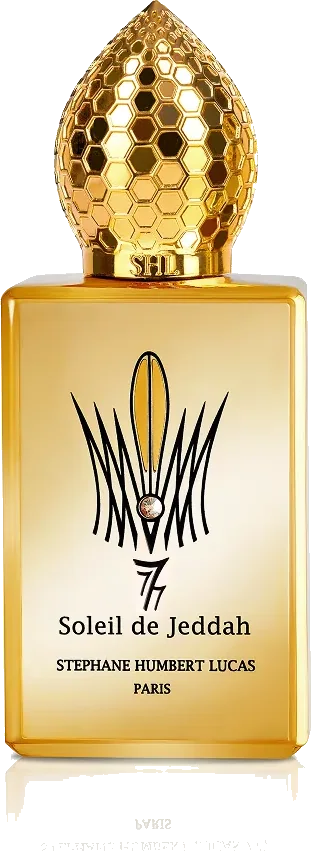
What Does Stéphane Humbert Lucas 777 Soleil de Jeddah Smell Like?
Soleil de Jeddah starts loud and sunny. Tart lemon lands first, quickly joined by Roman chamomile and an osmanthus so concentrated that most people read it as apricot, peach or even green mango rather than a flower. The effect is juicy and tangy without tipping into syrupy sweetness, which is the hardest part of this style to pull off.
After an hour or so the fragrance shifts. Powdery iris root cools the fruit down, earthy notes add a darker grain, and a soft golden amber begins to glow underneath. The real second act arrives around hour three, when smoky Russian leather takes over, backed by Madagascar vanilla and a faint civet-like sharpness that gives the base a slightly dirty, skin-warm finish. The drydown is where opinions split: fans call it magnetic, while anyone sensitive to animalic or smoky leathers may find it challenging.
The overall architecture, tangy fruit over lightly smoked leather, reminds some wearers of richer fruit-and-leather compositions, but the chamomile and iris keep this one feeling more floral and strange in a good way.
Performance
Longevity is the strong suit. Community reports cluster between 8 and 12 hours, with detailed wear logs putting full bottles past the 10 hour mark and a minority of skins burning through it in 6 or 7. Plan on a full workday of wear in cool to mild weather.
Projection is generous early. The first two hours throw a clear scent bubble of several inches, enough for people nearby to notice without you overspraying. Around hour two it pulls back to a closer, softer presence, though it stays noticeable up close for hours afterward. Note that the current retail version is sold as an eau de parfum; the 2014 release was originally marketed as a 24 percent extrait, which partly explains why older reviews describe monster performance while newer owners report more moderate results.
Best Clone Or Alternative
Perfume Parlour’s Bright Balad 1658 is the practical alternative. The UK shop describes it as belonging to the same olfactory family as Soleil de Jeddah and copies the entire published pyramid: lemon, chamomile and osmanthus up top, iris, ambergris and earthy notes in the middle, leather and vanilla at the base. A buyer review calls it true to the original.
At £22 for a 50ml eau de parfum it costs less than a tenth of the $320 original. The tradeoffs are what you would expect at this gap in price. The opening is harsher and more obviously synthetic for the first ten minutes, the leather base is flatter and loses the animalic flicker, and wear time tends to run shorter. As a daily driver or a way to test whether you even like this scent profile, it works well. If the fragrance clicks and you want the dense, natural-smelling drydown, the original still justifies itself.
One caveat: Perfume Parlour sells out of popular oils regularly, so availability changes week to week.
When To Wear It
Spring and fall are the sweet spots, and summer evenings work too since the citrus keeps things airy while the leather stays polished rather than heavy. This is an evening-leaning fragrance: date nights, dinners, special occasions, anywhere a distinctive scent trail helps rather than hurts. The strong first-hour projection makes it risky for tight offices or hot commutes; go light or save it for after dark.
Who Should Buy It
Buy the original if you collect niche fragrances and want a fruity leather that avoids every cliché in the category. It suits people who enjoy unusual structures, who like iris and chamomile as much as fruit, and who do not mind a whisper of animalics in the base. Fans of bright orientals with dark foundations will find a lot to like here.
Who Should Skip It
Skip it if you dislike smoky or animalic leathers, if sweet fruity florals bore you, or if the $320 price for 50ml does not fit your budget. Anyone mostly curious about the scent should try Bright Balad 1658 first, or order a sample before committing to a bottle.
Final Verdict
Soleil de Jeddah earns its reputation through contrast: sunny apricot-osmanthus brightness collapsing into smoky leather and warm vanilla. Longevity is reliable, the opening projects hard, and nothing mainstream smells quite like it. Value is its weak point given the capable £22 clone, so sample first, and buy the full bottle only if the drydown wins you over.